

『Liquid Turbine Flow Meter: High-Accuracy Mechanical Rotors for Low-Viscosity Fluids』Related information(clamp on meter|electromagnetic meter|venturi meterrotameter|orifice meter|ultrasonic flow meter|mass flow meter|coriolis mass flow meter|coriolis flow meter|magnetic flow meter|magmeter flow meter|magflow flow meter|mag meter flow meter|electromagnetic flow meter|vortex flow meter|turbine flow meter|thermal mass flow meter|thermal flow meter|rotameter flow meter)
Liquid Turbine Flow Meter: High-Accuracy Mechanical Rotors for Low-Viscosity Fluids
Quick Answer
A liquid turbine flow meter uses a precision rotor that spins as fluid passes through the meter body. It delivers high accuracy for clean, low-viscosity liquids like water, fuels, solvents, and light chemicals. You can count on ±0.5% of reading or better across a wide flow range. If your process needs repeatable batch control or inline blending, this meter is a practical choice with a fast response time and a direct pulse output.
How a Turbine Flow Meter Works
Fluid enters the inlet flow straightener. This removes swirl and creates a uniform velocity profile. The stream hits the multi-blade rotor suspended on a bearing assembly. The rotor spins at a speed directly proportional to the volumetric flow rate. Each blade passes a magnetic pickup coil mounted outside the meter body. The pickup senses the blade passage and generates a frequency signal. A flow computer or PLC converts this frequency into a flow rate in m³/h or litres per minute.
Most engineers skip this part, but the blade angle matters. Steep blade angles give faster rotation at low flows. Shallow angles work better for higher velocities. Silver Automation Instruments stocks models with different K-factors. A typical K-factor for a DN50 meter might be 110 pulses per litre. The calibration sheet from our workshop on the Yangtze River in Nanjing lists the exact value for every meter we ship.
When Turbine Meters Outperform Other Technologies
Turbine flow meters shine with thin, clean fluids. Viscosity below 5 cP is ideal. Water, diesel, kerosene, ethanol, methanol, and light lube oils all work well. In a water treatment plant in the Philippines, we replaced a bulk electromagnetic flow meter on a chemical dosing line with a DN25 turbine meter. The operator needed to verify dosing pump output at very low flow rates around 10 litres per hour. The turbine picked up the low flow instantly. The magmeter could not sense below its minimum velocity threshold.
For aviation fuel custody transfer at a depot in Kenya, a customer runs eight DN80 turbine meters in a loading rack. They value the fast response. The meter updates every 5 milliseconds. That speed lets the batch controller shut off the valve with precision. The repeatability stays within ±0.1%. Over thousands of batches, the totalised volume difference between the meter and the weighbridge is negligible.
Critical Installation Rules We See Ignored on Site
Upstream straight run is not a guideline. It is a hard requirement. You need 10 pipe diameters of straight pipe upstream and 5 diameters downstream. Some manufacturers claim 20D upstream. We have field data from a biodiesel plant in Malaysia where a DN40 meter with only 5D upstream straight run under-read by 3%. The swirl from a partially open butterfly valve twisted the flow profile. After re-piping with a flow straightener inline, the error dropped to 0.2%.
Always install a strainer or Y-type filter upstream. A tiny piece of weld slag or a stray PTFE tape fragment can lock the rotor. The journal bearings inside the meter are sensitive to debris. We have seen a single grain of sand score the tungsten carbide shaft. Once scored, the bearing drag increases and low-flow accuracy drifts. The strainer mesh should be 100 micron or finer for meters smaller than DN25.
Vapour bubbles cause over-reading. The rotor spins faster in a two-phase mixture. Keep the meter full of liquid at all times. Mount the meter at the lowest point of the pipe run if possible. If your process runs a solvent near its boiling point, increase system back pressure to suppress cavitation. A pressure of at least 1.5 times the vapour pressure at operating temperature is a safe start.
Construction Materials and Hazardous Area Ratings
The standard body is 316L stainless steel. Rotors use CD4MCu duplex stainless steel or 17-4 PH for extra hardness. Bearings come in tungsten carbide or ceramic for aggressive chemicals. For a dye manufacturer in Gujarat, India, we supplied a DN15 meter with all PFA-lined internals. The fluid was a solvent-based ink with mild corrosion. The meter is still running after three years with no maintenance.
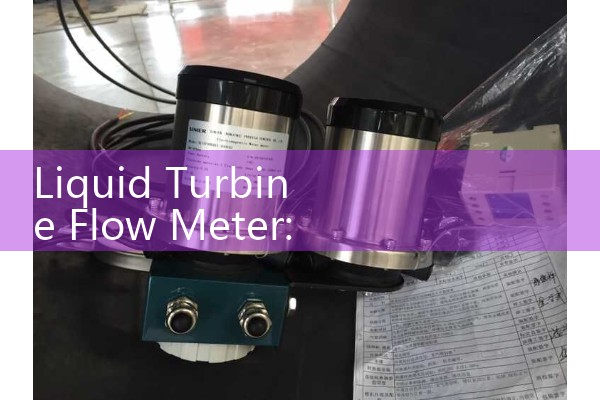
Pickup options include an integral 4-20 mA HART transmitter with a local display. The pulse output direct to PLC is also standard. For hazardous areas, we offer ATEX Zone 1 and IECEx Ex d or Ex ia versions. A typical model number from Silver Instruments might be SITF-050-316LC-EXD. That means a DN50 turbine flow meter, 316L construction, compression fitting, Ex d certified. You can call or WhatsApp us with your pipe size and we will send the correct model c
Common Pitfalls with Viscosity Changes
Turbine meter calibration is viscosity-dependent. That is a fact. If you calibrate on water at 1 cP and then run a fluid at 3 cP, the meter will under-read in the lower flow range. The transition from turbulent to laminar flow shifts the performance curve. Some operators apply a fixed correction factor. That works within narrow viscosity bands. For wide viscosity swings, you need a multivariable correction based on live temperature input from a PT100 sensor inside the meter body.
We helped a lubricant blender in Vietnam troubleshoot this exact issue. They blended a light hydraulic oil at 15 cP with additives. The turbine meter on the additive line under-dispensed by 4% in winter when the oil temperature dropped to 18°C. The oil viscosity nearly doubled. By adding a temperature sensor and a flow computer with a viscosity curve, they closed the error to under 0.5%. The PT100 was a simple screw-in probe, installed in a thermowell on the meter body.
Turndown Ratio and Flow Range Selection
A standard turbine meter offers a 10:1 turndown ratio. Some high-performance designs stretch to 20:1. If you need a wider range, consider the minimum Reynolds number. Below a certain velocity, bearing drag dominates and the meter stops. A DN15 meter might read from 0.3 m³/h up to 3 m³/h. A DN100 meter could span 20 m³/h to 200 m³/h. Check the minimum linear flow range on the datasheet. Do not select a meter based only on pipe size. Sizing by nominal diameter is a common mistake. A customer squeezing a DN50 meter into a DN50 line but with a normal flow of only 1 m³/h will get poor results. Drop to a DN25 meter with reducers. That pushes the operating point into the sweet spot between 20% and 80% of the maximum flow.
Frequency Output and Integration with Control Systems
The raw signal from the magnetic pickup is a sine wave or a square wave depending on the preamplifier. Typical frequencies range from 20 Hz at low flow to 2000 Hz at maximum flow. A direct pulse output connects to most PLC high-speed counter inputs. If your system requires 4-20 mA, use a loop-powered converter mounted directly on the turbine meter. We often supply the SITF-TRAN transmitter. It provides a two-wire 4-20 mA output, HART protocol, and a backlit LCD. The transmitter can display instantaneous flow in m³/h, litres/min, or gallons per minute, plus a resettable totaliser. From the HART signal, you can pull the raw frequency, totaliser, and diagnostic flags like signal amplitude drop that warns of bearing wear.
Silver Instruments Product Range and Delivery
We keep DN10 up to DN200 meters in our Nanjing warehouse. Threaded ends up to DN50, flanged from DN15 upward. ANSI 150 and 300 flanges are standard. DIN PN16 and PN40 are also available for Southeast Asian and Middle Eastern projects. Each meter leaves with a 5-point calibration certificate traceable to national standards. We can calibrate on water, diesel, or a customer-specific fluid at our in-house rig.
Standard lead time is one week for stocked meters. A custom connection or exotic flange may add two weeks. For a recent order from a desalination plant in Oman, we shipped four DN150 316L turbine meters within ten days including flanged ends and ATEX Zone 2 certifications. Send us your pressure (bar), temperature (°C), pipe size (DN), and flow range. We will recommend the correct meter within 24 hours.
FAQ
Can a turbine flow meter handle viscous fluids like heavy fuel oil?
Not well. Above 10 cP, the linear range shrinks. For high viscosity, an oval gear or Coriolis mass meter fits better. Our oval gear meter for diesel and oil is a solid alternative.
What is the minimum pipe straight run required?
10 pipe diameters upstream and 5 downstream with a flow straightener. Without a straightener, go to 15D or 20D upstream to be safe.
Do you offer EX-certified turbine meters for gas plants?
Yes. Order the Ex d or Ex ia version. All certificates ship with the meter. Common for skid-mounted chemical injection packages.
How often do bearings need replacement?
With clean fluid and a strainer, bearings can last 3 to 5 years. Loud noise or signal drop indicates wear. A spare bearing kit costs less than a service call.
Can I mount the meter vertically?
Yes, with flow upward to keep the meter full. Never mount with downward flow unless the back pressure is high enough to prevent draining.
Talk to an engineer today. Email [email protected] or call Tel: +86-135-1213-1526. Reach us on WhatsApp: 86-135-12131526 or WeChat: +86 13512131526. See our full turbine flow meter range at flow-meter.com.au.
 Hot Blog
 Related AD