

『Hydraulic Oil Flow Meter DN150 Central Hydraulic Station Enclosures』Related information(clamp on meter|electromagnetic meter|venturi meterrotameter|orifice meter|ultrasonic flow meter|mass flow meter|coriolis mass flow meter|coriolis flow meter|magnetic flow meter|magmeter flow meter|magflow flow meter|mag meter flow meter|electromagnetic flow meter|vortex flow meter|turbine flow meter|thermal mass flow meter|thermal flow meter|rotameter flow meter)
Hydraulic Oil Flow Meter DN150: Selecting the Right Meter and Enclosure for Central Hydraulic Stations
Quick Answer: For a DN150 hydraulic oil line at a central hydraulic station, an oval gear flow meter is the preferred choice because it handles high-viscosity oil with 0.5% accuracy. The meter must come with a weatherproof or explosion-proof enclosure suited to the station environment. Expect a typical price range of 4,200 to 7,800 USD depending on the enclosure rating, output signals, and whether ATEX or IECEx certification is needed.
We see many enquiries from hydraulic system integrators in Southeast Asia and the Middle East who are building central hydraulic stations for steel mills, offshore platforms, or large plastic injection plants. The main pipe is almost always DN150 and carries mineral-based hydraulic oil at 30 to 60 degrees Celsius. The oil viscosity runs from 32 cSt to 100 cSt, sometimes hitting 200 cSt during cold starts. This is where many flow meter types simply fail or give large errors.
A magnetic flow meter does not work here because hydraulic oil is non-conductive. Turbine meters struggle when viscosity changes and risk bearing wear from oil contamination. Thermal mass meters are out of their range completely. Our application engineers in Australia have tested oval gear flow meters on hydraulic return lines up to DN150 with excellent results. The oval gear design traps a known volume of fluid between two precision gears. Viscosity changes have almost no effect on accuracy. You get repeatable readings even if the oil temperature shifts from 20 degrees to 55 degrees Celsius.
In a central hydraulic station, the flow meter sits right after the pump manifold or on the return line before the cooler. The enclosure matters as much as the measuring principle. These stations are often installed in non-air-conditioned industrial halls or semi-outdoor skid frames. Dust, oil mist, and occasional high-pressure washdowns are common. We recommend a minimum IP66 enclosure, but many customers from the Middle East choose an Ex d flameproof enclosure rated ATEX Zone 1 or Zone 2 because the oil reservoir may emit flammable vapors under fault conditions. For a concrete plant in Indonesia, we supplied a DN150 oval gear flow meter with an IP67 stainless steel enclosure and a local totalizer display. The integrator mounted it directly on the central hydraulic power unit skid without any extra protective box.
Most engineers skip one step when specifying flow meters for hydraulic oil. They do not check the minimum and maximum flow rate at the meter. A DN150 oval gear meter typically measures from about 10 m³/h up to 300 m³/h, but you must verify that your normal operating flow sits between 30% and 80% of the meter’s full scale. If the pump delivers 450 L/min constantly and occasionally peaks at 900 L/min, a meter rated for 6000 L/min will barely move at normal flow. This kills low-flow accuracy. Silver Instruments provides a pre-sizing sheet where you enter your minimum, normal, and maximum flow in L/min, fluid viscosity, and oil temperature. Our team will propose the exact model with the correct gear clearance and pulse output frequency.
Signal output is another point we see customers overlook. A central hydraulic station PLC usually wants a 4-20 mA HART signal or a direct pulse output for totalization. The oval gear meter can provide a dual-channel quadrature pulse output, which works well for directional flow detection if the return line sometimes flows back during valve shifts. We pre-wire the signal cable gland on the enclosure side, so the installation crew just connects a single multi-core cable to the terminal box. No screwing around with open wiring inside an oily junction box.
Because the market now includes many refurbished hydraulic units, some stations operate at pressures up to 350 bar. The flow meter must have a pressure-rated housing that matches the design pressure. We have supplied DN150 ova
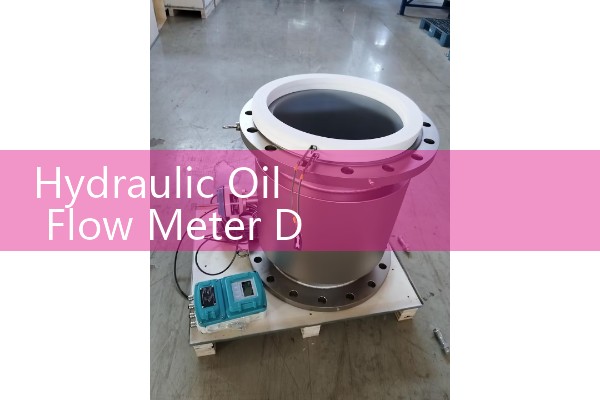
A paint manufacturer in Vietnam asked us recently about a DN150 flow meter for their central hydraulic station enclosures. The station supplies hydraulic power to multiple dispersion mixers. Their main worry was cleaning. The oval gear meter cannot be steam-cleaned, but we supplied a bypass line arrangement so they could isolate the meter and flush it with solvent without stopping production. The enclosure was a simple IP66 aluminum head with a local digital display showing litres per minute and accumulated cubic metres. They were happy with the local readout because operators did not have to walk back to the control room to see the flow rate.
We also get questions about the oil type. If the hydraulic system uses fire-resistant fluids like water-glycol or phosphate ester, the oval gear material must change. Standard cast iron gears are fine for mineral oil, but phosphate ester needs stainless steel gears and FKM seals. Silver Instruments keeps a complete compatibility table. You just tell us the fluid brand name and type, and we specify the correct elastomer and gear material.
Send us your pressure in bar, temperature in degrees Celsius, pipe size in mm, flow range in L/min, and the hydraulic oil grade you use. We will return a detailed quotation with the flow meter model, enclosure specification, ATEX certificate if needed, and lead time. Most DN150 hydraulic oil flow meters with enclosures ship from our China warehouse within 14 working days.
Frequently Asked Questions
Can I use an electromagnetic flow meter for hydraulic oil at a central hydraulic station?
No. Electromagnetic flow meters require a conductive liquid with a minimum conductivity of 5 µS/cm. Hydraulic oil is non-conductive, so the meter will not generate any signal. Choose a positive displacement meter like an oval gear type instead.
What is the typical pressure drop of a DN150 oval gear flow meter on hydraulic oil?
At maximum rated flow around 300 m³/h and oil viscosity of 46 cSt, pressure drop is usually 0.3 to 0.6 bar. At normal working flow of 150 m³/h, the drop stays below 0.2 bar. Always check the pump head available. If the system margin is tight, we can offer a dual-case meter with a reduced internal clearance to lower pressure loss.
Which enclosure certification is needed for a hydraulic station in an oil and gas area?
If the hydraulic station is inside a Zone 1 classified area, the flow meter enclosure must carry ATEX or IECEx Ex d IIB T4 certification at minimum. The terminal box should have flameproof cable glands. Silver Instruments provides Ex d enclosures with a certificate from an accredited testing body.
How do I protect the flow meter from solid contaminants in hydraulic oil?
Install a Y-type strainer with a 60-mesh screen at least 10 pipe diameters upstream of the flow meter. For systems with known metallic particle contamination from worn pumps, add a magnetic filter. The oval gear meter can tolerate soft particles, but hard sand or metal chips will scratch the gears and degrade accuracy.
What information must I submit for a DN150 hydraulic oil flow meter quotation?
Provide the pipe size, minimum and maximum flow rate in L/min, operating pressure, oil temperature range, oil type or brand, required output signal, and the hazardous area classification if applicable. With these details, we can recommend the exact model and enclosure within one working day.
 Hot Blog
 Related AD