

『Jet Fuel Flow Meter 100 L/h: Standard Flow Profiles and Performance Rules』Related information(clamp on meter|electromagnetic meter|venturi meterrotameter|orifice meter|ultrasonic flow meter|mass flow meter|coriolis mass flow meter|coriolis flow meter|magnetic flow meter|magmeter flow meter|magflow flow meter|mag meter flow meter|electromagnetic flow meter|vortex flow meter|turbine flow meter|thermal mass flow meter|thermal flow meter|rotameter flow meter)
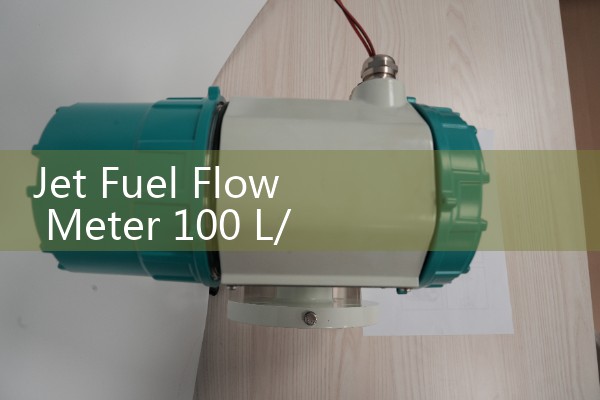
Jet Fuel Flow Meter 100 L/h: Standard Flow Profiles and Performance Rules
Quick Answer: When you need to measure jet fuel at exactly 100 L/h, use a positive displacement oval gear meter or a micro Coriolis mass flow meter. Both types ignore laminar flow profiles and deliver repeatability inside ±0.1 % at this low rate. Avoid standard turbine meters because they lose accuracy when the Reynolds number drops below 2000.
Why 100 L/h Is a Critical Measurement Point for Jet Fuel
100 L/h equals roughly 1.67 L/min or 80 kg/h for Jet A-1 at 15 °C. Many engine test cells, small turbine fuel audits, and additive injection skids run at this exact setpoint. A meter sized for 100 L/h needs to hold its stated accuracy even when the flow drops to 10 L/h. That demands a true low-flow design, not just a scaled-down industrial meter. In practice, DN4 or DN6 connections are the norm. A paint manufacturer in Thailand recently switched from a DN10 turbine to a DN4 oval gear meter because their 100 L/h fuel return line was showing erratic readings. The issue disappeared after the change.
Standard Flow Profiles You Must Know
At 100 L/h inside a 6 mm tube, the fluid stays laminar. The Reynolds number stays below 2000 for standard Jet A-1 viscosity around 1.5 cP. Velocity distribution becomes parabolic, not flat. Oval gear meters do not care about the profile. They capture a fixed volume per pocket and push it through regardless of how the liquid enters. Coriolis meters also ignore the velocity profile because they sense mass directly through tube oscillation. A turbine meter, by contrast, needs a fully developed turbulent profile to generate a linear frequency. You would need 20D of straight run upstream and a flow conditioner. Even then, bearing drag at 100 L/h causes the K-factor to fall off. Most engineers skip turbine options for this range once they check the Reynolds number.
Performance Rules for Accurate Jet Fuel Measurement at 100 L/h
Rule one. Viscosity compensation is mandatory. Jet A-1 viscosity shifts from about 8 cSt at minus 20 °C to 1.5 cSt at 20 °C. An oval gear meter without temperature correction can lose 2 to 3 percent of its accuracy over that span. We integrate a PT100 probe directly into the meter body. The transmitter adjusts the pulse weight in real time using a stored viscosity curve. Rule two. Always keep back pressure above 1.5 bar gauge at the meter outlet. Jet fuel has a high vapour pressure at altitude or when hot. Without enough back pressure, dissolved gas can come out of solution inside the measuring chamber. We have seen this on customer sites many times. A fuel testing lab in Malaysia lost half a litre per hour in their readings until they added a spring-loaded check valve downstream. Rule three. Filter the fuel to 75 microns or finer. Rust flakes from steel tanks can jam the gears or scratch the measuring tube. A Y-strainer with a magnetic insert solves this at low cost.
Recommended Meter Types and Silver Instruments Models
For 100 L/h of jet fuel, we recommend two Silver Automation Instruments models. The OG-Series oval gear flow meter in DN4 or DN6 handles 2 to 160 L/h with an accuracy of ±0.5 % of reading. Wetted parts come in aluminium or 316L stainless steel. Output options are NPN/PNP pulse or 4-20 mA with HART. ATEX Zone 2 certification is available for fuel storage areas. The second choice is the C-Series micro Coriolis mass flow meter. It covers 0 to 150 kg/h and gives you mass flow, density, and temperature on a single Modbus RTU link. Base accuracy
Installation and Connection Rules That Save You Downtime
Mount an oval gear meter with the rotor axis horizontal. A vertical rotor axis puts uneven load on the bearings and reduces low-flow accuracy. Inlet and outlet straight pipe lengths can be short. 5D upstream and 3D downstream work fine. Coriolis meters need no straight runs at all. Use 1/4 inch or DN4 compression fittings. For wiring, run a twisted shielded pair for 4-20 mA HART back to your PLC or fuel data logger. If you choose pulse output, select a module that can count high frequencies. 1000 pulses per litre at 100 L/h gives roughly 28 Hz, easily handled by any standard counter. In a Zone 2 hazardous area, specify ATEX II 3G Ex nA IIC T4 and use suitable cable glands.
Why Silver Automation Instruments
We manufacture these meters in our own ISO 9001 facility and calibrate every unit on a master meter bench traceable to NIST standards. The calibration report you receive shows five test points: 10 %, 25 %, 50 %, 75 %, and 100 % of the full scale. We ship to Southeast Asia, Australia, the Middle East, Latin America, and Africa within three weeks. Warranty stands at 24 months. Here is the thing. We do not just sell a meter. We also provide the viscosity-density compensation table pre-loaded in the transmitter. So you can commission the unit on the same day it arrives.
Frequently Asked Questions
What is the best flow meter for jet fuel at 100 L/h? For clean jet fuel and a fixed 100 L/h duty point, an oval gear positive displacement meter gives the best balance of cost and accuracy. If you need mass flow in kg/h directly, a micro Coriolis meter works better. Both types are immune to laminar flow profile errors.
Can I use a turbine meter at 100 L/h for Jet A-1? Generally, no. The low Reynolds number hurts linearity. A very small turbine with micro bearings can approach 100 L/h, but repeatability often drops below 0.5 %. Bearing life also becomes a concern. We do not offer turbine meters for this range unless you can accept an uncertainty above 1 %.
Do I need ATEX certification for jet fuel metering on a test bench? If your test bench sits in a well-ventilated, non-hazardous room, ATEX is not mandatory. However, many refineries and fuel farms classify any area with open fuel lines as Zone 2. We supply both non-ATEX and ATEX Zone 2 versions. Specify your zone requirement when you request the quote.
What signal output should I choose for 100 L/h monitoring? Pulse output gives you the highest totalising resolution. A constant of 1000 pulses per litre is typical. For analogue rate signals, 4-20 mA with HART is standard. We can also provide Modbus RTU for direct serial connection to your SCADA.
How do you verify a 100 L/h jet fuel flow meter before shipment? We calibrate each meter with a test fluid that matches Jet A-1 viscosity at 20 °C, around 1.5 cP. The certificate lists readings at five flow points. All results are traceable to a national metrology institute.
Send us your fuel type, operating pressure (bar), temperature (°C), pipe size (DN), and flow range (L/h). We will recommend the correct jet fuel flow meter and return a detailed quote within one working day.
 Hot Blog
 Related AD