

 Current position > Product detail
『Fill Rite Flow Meter Series 900 Troubleshooting: Resolving Counter Jams and Accuracy Drift』Related information(clamp on meter|electromagnetic meter|venturi meterrotameter|orifice meter|ultrasonic flow meter|mass flow meter|coriolis mass flow meter|coriolis flow meter|magnetic flow meter|magmeter flow meter|magflow flow meter|mag meter flow meter|electromagnetic flow meter|vortex flow meter|turbine flow meter|thermal mass flow meter|thermal flow meter|rotameter flow meter)
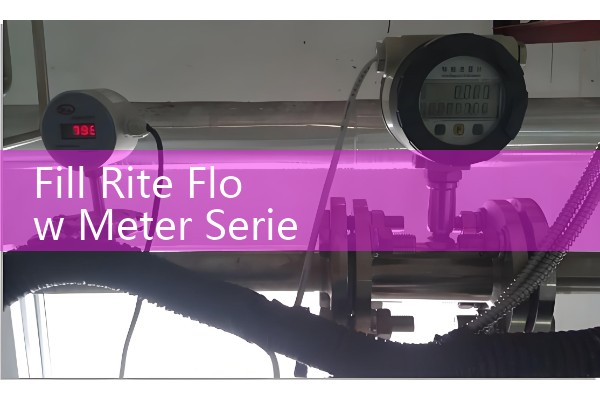
Fill Rite Flow Meter Series 900 Troubleshooting: Resolving Counter Jams and Accuracy Drift
Quick Answer: Most counter jams on Fill Rite Series 900 come from solids in the fuel, high viscosity fluid, or a bent register shaft. Accuracy drift usually means worn clearances, temperature changes, air on the inlet side, or a strainer that is no longer filtering. Clean the strainer first. Then check the register drive and measure the actual volume with a calibrated test can. If the error is not linear across flow rates, replace the meter or switch to a Silver Instruments oval gear flow meter with pulse output.
Why the Series 900 Counter Jams in the Field
Field reports from fuel depots and mobile service trucks point to three main causes. First, fine rust and sand pass through an old strainer and lodge between the counter gears. Second, diesel or heavy oil at low temperature increases torque on the register shaft. Third, water hammer from a fast pump start or a quick nozzle close shocks the mechanical counter. A fuel depot in Malaysia saw this after a bypass filter was removed. The register worked for two weeks and then the totalizer wheel stuck at 5897 liters.
In practice, most operators check the filter first. But a blocked strainer is not always the cause. If the strainer is clean, the problem is usually inside the register assembly. The plastic totalizer gears wear or a small piece of debris enters through the vent hole. Once one tooth breaks, the next gear locks under spring pressure.
How to Free a Jammed Counter Without Opening the Register
Start with external checks. Close the inlet and outlet valves. Depressurize the line. Remove the strainer basket and clean it. Then remove the register assembly if the design allows it. On the Series 900, the register often uses a magnetic drive. Pull the register and inspect the drive dog. Silica sand and rust film pack around the drive dog and block rotation. Clean it with a soft brush and a small amount of solvent. Let the parts dry before reassembly.
Do not force the reset knob. Forcing the knob bends the shaft and makes the jam worse. We have seen this on customer sites many times. If the totalizer still does not move after cleaning, replace the register assembly. A new register is cheaper than losing a fuel delivery route over a stuck totalizer.
Accuracy Drift on Fill Rite 900: Causes That Field Technicians Miss
Accuracy drift means the display total no longer matches the actual volume. Common root causes include thermal expansion of diesel, viscosity shift in gear oil, air locked in the inlet line, and a worn measuring chamber. Fill Rite 900 is a positive displacement meter. The clearance between the rotor and housing sets the slip rate. Once the housing or rotor wears past 0.2 mm, low flow accuracy falls. That condition is hard to see during a quick bench test.
A fuel depot in Vietnam compared the 900 register against a calibrated 20 liter test can. The meter under reported by 1.8 percent at 30 liters per minute, but only 0.4 percent at 70 liters per minute. The drift was not linear. That is typical of worn clearances. If the error disappeared at high flow, the meter body was worn.
Air entrainment is another frequent cause. A loose suction hose, a dried gasket, or a leaking inlet valve lets air into the fluid. Positive displacement meters will count some of the air volume as liquid. That produces a high reading or a bouncing register needle. Tighten the suction side fittings. Inspect the hose for cracks. If the fluid appears cloudy in a sight glass, fix the leak before testing accuracy.
Field Checks for Accuracy Drift Before You Replace the Meter
Run three tests before you order a replacement. First, meter exactly 20 liters into a calibrated vessel at 20, 40, and 70 liters per minute. Compare the register total at each flow rate. A lin
Second, check the inlet vacuum with a compound gauge. High inlet vacuum lowers the fill efficiency of the measuring chamber. It often comes from a dirty strainer, a collapsed hose, or a pump set too far from the supply tank.
Third, record the fluid temperature. Diesel volume changes by about 0.09 percent per degree Celsius. If the reference tank is warmer than the meter, you will see a drift that is not a meter fault. For critical transfers, install a PT100 temperature sensor and correct the volume with a flow computer or use a Coriolis mass flow meter from Silver Automation Instruments.
When a Fill Rite 900 Is Not Worth Repairing
If the housing is scored, the rotor has flat spots, or the counter gears strip twice, replacement is cheaper. Repair kits cost 40 to 60 percent of a new unit in some regions. Labor adds risk. Corrosion on seawater or methanol applications often finishes the lower housing.
Silver Instruments oval gear flow meters with pulse output eliminate the mechanical register. They use the same positive displacement principle but with pulse output or 4-20 mA HART. This reduces counter jams because there is no mechanical totalizer. For diesel transfer, the Silver Instruments OG series with aluminum or stainless steel body fits DN15 to DN50 lines. It handles 0.5 to 100 liters per minute. Accuracy is 0.5 percent of reading over a wide viscosity band.
Replacement Flow Meter Options from Silver Instruments
For a direct replacement on diesel or light oil, use an oval gear flow meter from Silver Instruments. It has a local LCD or pulse transmitter. No mechanical counter to jam. For conductive fluids like wastewater or chemicals, use an electromagnetic flow meter. The minimum conductivity is typically 5 µS/cm. For bunker fuel or crude oil, use a Coriolis mass flow meter that reads kg/h and density. Silver Automation Instruments supplies DN15 to DN300 sizes. Standard outputs include 4-20 mA HART, pulse, and Modbus. For hazardous zones, specify ATEX Zone 1 or Ex d approvals. Materials include 316L stainless steel, PTFE liners, and ceramic bearings.
Send us your fluid, viscosity in cP, pipe size DN, flow range, and pressure in bar. The engineering team at Silver Instruments will select a meter and send a quote within one working day.
FAQ
Can I repair a jammed Fill Rite Series 900 counter without a new register?
Sometimes yes. Remove the register and clean the drive dog. If the plastic gear is cracked, repair is not reliable. Install a new register assembly.
Why does the Series 900 read low at low flow?
Positive displacement meters slip more at low flow. Worn rotors and housing increase slip. Check with a test can at three flow rates before changing the meter.
Does fluid temperature really affect accuracy?
Yes. Diesel expansion is about 0.09 percent per degree Celsius. A 15 degree Celsius difference between the tank and meter causes a visible shift. Use a PT100 sensor for critical transfers.
What is the best replacement for a Fill Rite 900 on diesel?
A Silver Instruments oval gear flow meter with pulse output works well for diesel transfer. It removes the mechanical counter and gives 0.5 percent accuracy.
How do I get a quote for a replacement flow meter?
Send us your fluid, viscosity in cP, pipe size DN, flow range in liters per minute, and pressure in bar. Contact Silver Instruments at Tel +86-25-68650347, Whatsapp +86-25-52155837, WeChat +86 15365082610.
Silver Automation Instruments supports fuel terminals, chemical plants, water plants, and food manufacturers across Southeast Asia, Oceania, Latin America, Africa, and the Middle East. See flow-meter.com.au for the full flow meter range.