

 Current position > Product detail
『Calculation formula for canal flow』Related information(clamp on meter|electromagnetic meter|venturi meterrotameter|orifice meter|ultrasonic flow meter|mass flow meter|coriolis mass flow meter|coriolis flow meter|magnetic flow meter|magmeter flow meter|magflow flow meter|mag meter flow meter|electromagnetic flow meter|vortex flow meter|turbine flow meter|thermal mass flow meter|thermal flow meter|rotameter flow meter)
How wide and high is the channel required for a water flow rate of 1.0.5 cubic meters per second?
The flow rate is related to the flow velocity and cross-sectional area. Cross sectional area=(1+1.5) x1.2 ÷ 2=1.5 (square meters). If the cross-sectional area remains unchanged and the flow velocity=1 meter/second, the flow rate=flow velocity x cross-sectional area=1x1.5=1.5 (cubic meters/He Hong seconds). The flow velocity=3 meters/second, and the flow rate=flow velocity x cross-sectional area=3x1.5=4.5 (cubic meters/second)
2. How to calculate the water flow velocity in a canal?
The calculation of water flow velocity in a canal can be achieved through formula derivation or professional equipment measurement. The specific methods are as follows:
1. Formula calculation method The water flow velocity in a canal can be calculated by the relationship between flow rate and cross-sectional area. The core formula is: flow velocity (V)=flow rate (Q)/cross-sectional area (A). Unit explanation: Flow velocity is in meters per second (m/s), flow rate is in cubic meters per second (m3/s), and cross-sectional area is in square meters (m2).
. Parameter acquisition: Flow rate (Q): can be directly measured through a flow meter, or indirectly calculated through parameters such as water level and flow rate. Sectional area (A): It needs to be calculated based on the geometric shape of the water channel. For example, the cross-sectional area of a rectangular canal is width (B) x depth (H). Example: If a rectangular canal has a width of 2 meters, a depth of 1.5 meters, and a flow rate of 3 m3/s, the flow velocity is V=3/(2 × 1.5)=1 m/s. Figure: Schematic diagram of the cross-section of the rectangular canal.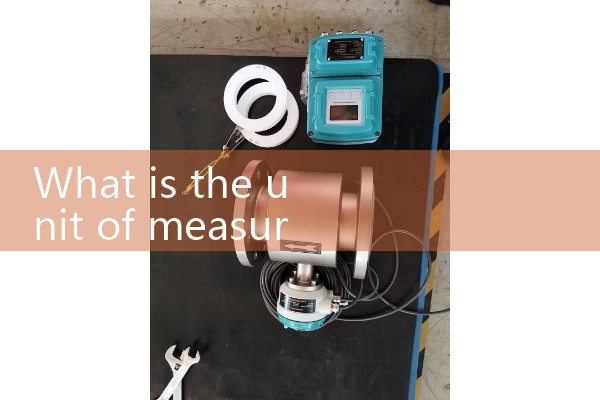 >
>Secondly, the formula for equipment measurement method calculation requires known flow rate and cross-sectional area, while equipment measurement can directly obtain flow velocity data, which has stronger real-time performance. The common equipment is as follows: 1. Principle of radar flowmeter: Based on the Doppler effect, it detects the surface velocity of water flow by emitting microwave radar. Features: It is not affected by environmental factors such as temperature, pressure, and air density, and can work 24/7. Using imported radar antennas, with high measurement accuracy and wide range (usually 0.02-20 m/s). Equipped with tilt compensation and gain adjustment functions, easy to install. Application scenario: Surface velocity monitoring of water flow in rivers, open channels, underground sewage wells, etc., which can be connected to a water level gauge to form a flow monitoring system. Figure: Installation diagram of radar flowmeter 2 Principle of handheld radar flowmeter: Based on the Doppler effect, but with a portable design, suitable for on-site measurement. Features: Non contact measurement, avoiding interference from sewage and sediment. Easy to operate, built-in tilt angle measurement function, can quickly obtain flow velocity data. Application scenarios: Temporary monitoring, emergency measurement, or scenarios where it is difficult to install fixed equipment
3. Principle of Doppler flowmeter: By emitting ultrasonic waves into the water flow, the propagation speed and frequency changes are measured to calculate the flow velocity. Features: Suitable for various water channels and flow velocity ranges (usually 0.01~10 m/s), with high precision sensitivity (± 1%). Continuous measurement of flow rate a